Last year, our customers made an average of £24.94*selling their books to us.
Sell My Books
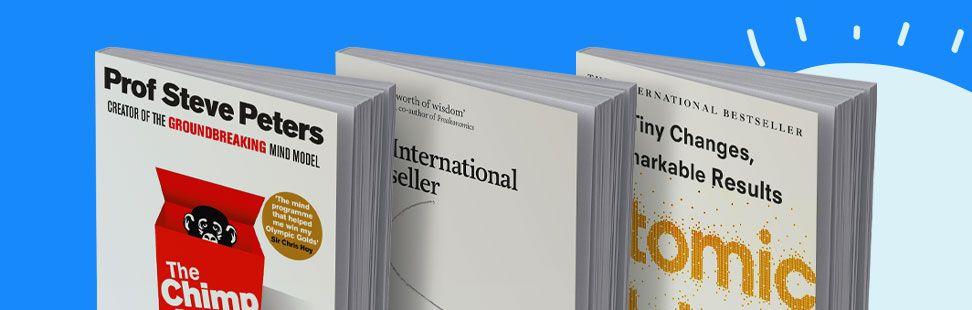
Self-improvement is the genre Britons most often sell back. At least 30% of the books arriving at WeBuyBooks are in near-new or barely-read condition.
New analysis of almost five million books reveals what the nation buys with good intentions, and what it quietly gives up on.
Analysis by WeBuyBooks. Based on 4,947,788 books bought from the UK public over 12 months.
Britain buys books to become a better version of itself. More often than not though, it then sells them on unread.
Analysis of nearly five million books bought from the public over the past 12 months shows that self-help, self-improvement and wellbeing titles are the most commonly sold-back category in the country. Crime and mystery follows in second place, then psychology, then mysticism.
What makes the finding sharper is the condition those books arrive in. At least 30% of all books received are in near-new or unread condition, with spines uncracked and pages unturned. These are not well-thumbed favourites being passed on. In many cases they are books that were never started.
That figure lands almost exactly alongside national research. The Reading Agency’s 2025 study of 4,000 UK adults found that 31% say they struggle to finish what they start reading. Among 16 to 34-year-olds, that rises to 43%. Roughly a third of us struggle to finish a book, and roughly a third of the books we sell back look barely touched.
|
£4m+ paid out to sellers in 12 months |
67,068 individual sellers |
£2,700 earned by the top seller in a year |
25 books in a typical clear-out |
Over the same 12 months, WeBuyBooks paid out £4,052,539 to people selling books from their own shelves. That was spread across 67,068 individual sellers, plus some charities and libraries. The average payout per order was £24.94. The single biggest earner made £2,700 in a year. This is not a get-rich scheme, and the numbers make that plain. The typical clear-out is around 25 books, so the value lies in volume and in the space reclaimed. Across the country, though, it adds up to millions of pounds returning to households from books that were otherwise gathering dust.
“What’s particularly encouraging is that more people are recognising the value sitting on their own bookshelves. Rather than letting books gather dust, they’re discovering they can earn extra cash while helping someone else enjoy the same book.”
Mike Lane, CEO and co-founder, WeBuyBooks
January is the peak period for selling books back, driven largely by unwanted Christmas gifts and abandoned new years resolutions. The bigger triggers, though, are the turning points in people’s lives.
Moving in with a partner, a new baby arriving, and a spare room being converted are all consistent drivers. So are divorce, house moves, downsizing in later life and inheriting a relative’s collection.
The spring clean accounts for another seasonal spike.
There is a clear gender pattern too, with 65% of sellers being women. Sellers span every age group, though over-65s are slightly over-represented and 18 to 24-year-olds slightly under.
The second-hand market moves faster than most people expect, and it moves with the news.
“The second-hand book market reacts remarkably quickly to what’s capturing the public’s attention. We’ve seen books double in value almost overnight. When England are doing well in a major tournament, football biographies suddenly become much more sought after. The same happens when an author wins an award, a celebrity passes away or a TV adaptation is released.”
Mike Lane, CEO and co-founder, WeBuyBooks
There are counter-intuitive rules to value, too. A handsome leather binding is not automatically a sign of worth.
“One of the biggest surprises for customers is that a beautiful leather binding isn’t necessarily valuable. In fact, books that have been rebound can be worth less than original copies, because elements might have been removed or lost, and because collectors generally prize originality over appearance.”
Mike Lane, CEO and co-founder, WeBuyBooks
Britain’s appetite for used books stands out internationally. Research by the European and International Booksellers Federation covered 19 countries and compared how people buy.
It found that 51% of UK book buyers had bought second-hand in the previous 12 months. That is well above the 35% average across all countries surveyed, and among the highest of any market studied.
Price is a large part of it. A second-hand copy typically costs around 40% less than a new one, putting books within reach for readers who would otherwise go without.
“Britain has always had a strong printing and second-hand book culture, from independent bookshops to charity shops. The internet and apps like ours have transformed it into a truly nationwide marketplace. People can now easily buy and sell books from anywhere in the country, and it’s a win-win. They save money, give books a second life, and make a more sustainable choice.”
Mike Lane, CEO and co-founder, WeBuyBooks
The wider picture from national research suggests Britons are reading more than they give themselves credit for. It is just not always in the way they imagine.
The Reading Agency found that 47% of UK adults reject the label of “regular reader”. Yet 82% read something, in some format, at least once a week.
The average adult spends around 195 hours a year reading social media posts. That compares with 143 hours a year reading print books.
Print, meanwhile, remains the format people buy, keep and pass on. It is also the only one with a resale value.
A digital file cannot be sold, lent or handed to someone else once it is finished. Or, as this data suggests, once it never quite got started.
WeBuyBooks data
Figures are drawn from WeBuyBooks’ own transactional records covering a 12-month period.
These cover 4,947,788 books bought from the UK public and £4,052,539 paid out to sellers, across 67,068 individual sellers. Charities, libraries and bulk partners are excluded from the seller count.
The average payout was £24.94 per order, with a single highest annual seller total of £2,700 and a typical clear-out size of 25 books.
The 65% female seller split is based on Google Analytics data. Condition and genre findings are based on WeBuyBooks’ internal grading and categorisation of items received.
Second-hand book buying (51% and 35%)
European and International Booksellers Federation (EIBF) and RISE Bookselling, Study on Consumer Behaviour: Book-Buying Trends, Reading Habits and Customer Needs, October 2024.
Survey conducted by Listen across 19 countries in spring 2024, with a representative sample of 500 respondents per country and 9,500 in total. UK data, page 22.
Reading habits and completion rates
The Reading Agency, State of the Nation’s Adult Reading 2025 (Spaulding, Norton and Onursal). Research conducted by Censuswide with 4,000 UK adults aged 16+, 11 to 17 April 2025.
Figures cited are struggling to finish reading (31%, rising to 43% of 16 to 34-year-olds), reader identity (47% and 82%), and annual reading hours by format (195 hours social media, 143 hours print books).
A note on comparison
The EIBF study surveyed 500 people per country. International comparisons should therefore be read as broad indicators of direction rather than precise rankings.
For interview requests, further data or regional breakdowns, contact the WeBuyBooks press office. Spokesperson: Mike Lane, CEO and co-founder, who has spent more than 18 years working in recommerce and the circular economy.
Would you like to continue the conversation? Share this post!



 How It Works

 Get the app

