Last year, our customers made an average of £24.94*selling their books to us.
Sell My Books
Think you might have a valuable book at home? WeBuyBooks CEO and co-founder Mike Lane shares his expert advice on spotting rare and collectible books, including why first editions, dust jackets, condition, signatures and specialist subjects can make all the difference.
Most of us have books sitting on our shelves that we haven't opened in years. But could one of those forgotten books actually be worth a surprising amount of money? That was the question explored when WeBuyBooks CEO and co-founder Mike Lane joined Mike Buxton on BBC Radio Sussex and BBC Radio Surrey's “Sound Advice”.
With Agatha Christie's birthday approaching, the conversation began with a remarkable example: a first edition of The Secret Adversary can reportedly be worth around £5,000 without its original dust jacket - and as much as £80,000 with it.
Of course, not every old book is a hidden treasure. As Mike explained during the interview, age alone doesn't make a book valuable. Rarity, collectability, condition and demand all play a part. So, before you clear your bookshelves or head to a boot fair looking for your next bargain, here's some expert advice on what could make a book valuable - and what to look out for.
One of the biggest misconceptions about valuable books is that the older a book is, the more money it must be worth. But that's not necessarily the case. As Mike explained, simply being Victorian or having been printed many years ago doesn't automatically make a book valuable. In fact, there are plenty of old books that aren't particularly sought after by collectors.
Instead, it's worth looking at rarity, collectability, condition and demand. A book on a very specialist subject, for example, may be much more interesting to a collector if relatively few copies were produced.
Ultimately, a book is worth what someone is prepared to pay for it. If there is a collector looking for a particular title or edition, that demand can make all the difference.
So, what should you actually look for if you're wondering whether a book could be worth money?
There isn't one single factor that determines a book's value. Instead, several things can come together to make a particular copy desirable to collectors.
If you're interested in hunting for potentially valuable books, one of the most important things to learn is how to recognise a first edition.
Collectors often specifically look for first editions, but identifying them isn't always as simple as looking at the publication date.
As Mike explained, books can have different printing runs, and different publishers have different ways of indicating editions and printings. This means that understanding the information on a book's publisher or copyright page can be particularly useful.
For anyone serious about collecting, learning how to identify first editions is therefore a valuable skill.
And if you're unsure, there are modern tools that can help with your research. Mike suggested taking photographs of the title page and publisher's page and using AI to help identify whether a book could be a first edition. However, this should be treated as a starting point for further research rather than a definitive valuation.
If you've got an older book with its original dust jacket, look after it.
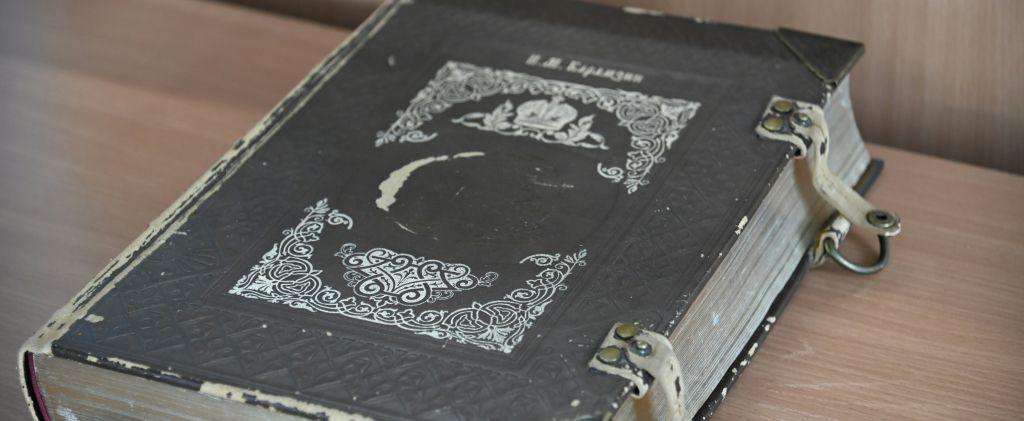
The dust jacket might seem like little more than packaging, but for collectors it can be an important part of the book. Mike explained during the interview that keeping the original dust jacket can potentially triple the value of a book.
And if that dust jacket is damaged, don't be tempted to repair it yourself with Sellotape or glue. DIY repairs can potentially do more harm than good when it comes to a collectible book. So, if you've inherited an old book with its original dust jacket, resist the temptation to remove it or "tidy it up". That slightly battered-looking jacket could actually be one of the most important parts of the book.
Top tip: Got an old book with its original dust jacket? Keep it!
Condition can have a significant impact on the desirability of a book, so if you're hoping your collection might contain something valuable, it's worth taking care of it.
Damp and mould can devalue books, while sunlight can fade the covers over time. Mike recommends keeping your collection away from direct sunlight.
Other things to look out for include loose bindings, missing pages and damage to the inside of the book. Even things that might seem relatively minor, such as highlighting, writing or children's crayon marks, can affect a book's condition.
Ex-library books can also have their own issues. Protective coverings and library use can sometimes mean that pages or parts of the original binding are no longer in the same condition as when the book was published.
And if you do find a damaged book, think twice before reaching for the glue or Sellotape. An attempted repair could potentially reduce its appeal to collectors.
Finding an interesting book can be part of the fun, but don't make the mistake of assuming that old equals valuable.
Instead, look for books that are unusual, rare or connected to a specialist subject. A book from a particular profession or niche area, for example, may be of interest to a relatively small group of collectors.
Condition is important too. A rare book in poor condition may be considerably less desirable than a similar copy that has been well looked after.
And keep an eye out for first editions. Learning how different publishers identify editions and printing runs could give you an advantage when you're browsing shelves of second-hand books. The key takeaway? Don't just ask, "How old is this?" Ask, "How rare is this, who would want it, and what condition is it in?"
A signature doesn't automatically make a book valuable, but in the right circumstances it can certainly add to its appeal.
During the interview, Mike discussed signed books in the context of Star Wars, a subject with a particularly strong collector following. A desirable signature in a collectible book could potentially add value rather than reduce it.
But, again, context matters. If you have a signed book at home, don't immediately assume you've struck gold. Instead, consider who signed it, what they've signed, how collectible the subject is, how common signed copies are and the overall condition of the book.
Think you've discovered something special?
The first thing to do is research it. Look at the title page, publisher's information and edition details, and investigate whether the book is genuinely a first edition or part of a particular printing. Don't assume that a book is valuable simply because it's old, signed or associated with a famous author. Rarity, collectability, condition and demand all need to be considered.
If you're simply looking to turn your unwanted books into cash rather than becoming a serious book collector, WeBuyBooks offers a straightforward alternative.
You can visit the WeBuyBooks website or download the app and scan the barcode on your books where one is available. You'll receive an offer for the book, and if you decide to sell, you can send your books to WeBuyBooks using the free delivery service. Payment is then made after the books have been received.
The advice above comes from WeBuyBooks CEO and co-founder Mike Lane's conversation with Mike Buxton on "Sound Advice" on BBC Radio Sussex and BBC Radio Surrey.
If you'd like to hear the conversation in full, you can listen to the original interview below, followed by the full transcript.
BBC Radio Sussex and BBC Radio Surrey – Interview
Mike Buxton sits in for Sarah Gorrell - (11/09/2026)
Mike Buxton:
Well, it's time for our regular “Sound Advice”, and if you love reading, the chances are you build up quite a collection of books over the years, but have you ever wondered if one of those dusty old copies could be worth a bit of money? Well, with Agatha Christie's birthday approaching, did you know that the first edition of her novel “The Secret Adversary” is worth around £5,000 without its original dust jacket, but with it, it's worth £80,000!? That's a lot of money! So, for today's “Sound Advice”, I'm joined by Mike Lane, CEO and co-founder of WeBuyBooks, a website that specialises in helping you make money from your pre-loved books, CDs and DVDs. Morning to you, Mike.
Mike Lane:
Good morning! Do you know who owned that book that you just referred to? It was Charlie Watts, the drummer for the Rolling Stones, an absolutely avid collector of rare and old books, first editions. I think his collection sold recently, at Christie's, for something like £3.6 million!
Mike Buxton
That is a lot of money there, Mike! A lot of money. I'm thinking about my book collection at home. It's not vast, but I have some books that I've really enjoyed reading over the years, sometimes revisit as well. I'm just wondering whether I've got anything valuable in there? I suspect, like most of us, probably not. So, what makes a book valuable, first of all?
Mike Lane:
Like anything else, what makes something valuable is because somebody else is prepared to pay that price. They want that book. They're a collector. It's a special interest. Your common-or-garden books, your popular paperback fiction, I'm afraid there's not a lot of value in those at all. I don't know what sort of books you have, but for your “50 Shades of Grey” for example, I'm sorry there were millions printed, and they're worth nothing.
But you might have a book on a very specialist area, or a certain profession where there weren't many written; that might be a particular interest to somebody. Rarity is definitely one factor. Collectability, another.
Mike Buxton: Well, bang goes my hopes of retiring early in that case, then!! I suppose the, the classic tale from modern times is the first edition of Harry Potter, J.K. Rowling. If you got one of those in pristine condition, that's worth a lot of money. But talk us through some of the damage and how that can actually really quickly devalue a book that, on the surface, might be valuable.
Mike Lane:
If you have a dust jacket, keep the dust jacket. That can triple the value of the book.
If you see it's a little bit damaged and you think, “Oh, I'll fix that with a bit of Sellotape or glue,” don't! You don't do that.
If it's been subject to damp or mould, that can devalue it.
Often ex-library books, they put all that protective extra covering on. In the process, the free end page, which is the blank page inside the cover, that goes missing, and some of the binding might become a bit loose.
Obviously, highlighting and scrolling. You can have some quite old children's books, but they've sadly got crayon all over the middle of them, so it’s factors like that.
Keep your book collection out of the sun, because the sun can fade the covers. That could bring the value to the book.
Charlie Watts collected pristine books. That's what he was after. I think he paid £280,000 pound for the copy of The Great Gatsby, but it was mint and it had a particular inscription in it, that made it more valuable.
Mike Buxton:
If we want to go hunting for books, what should we be looking out for if we say go to a boot fair in summer or to a flea market in, in winter? Or what would be your favourite book for hunting for? What are some of the genres and some of the signs we should be looking out for?
Mike Lane:
There's an assumption now that if it's old, it's Victorian, it's worth something. That is not the case at all. What you're looking for is unusual, rarity, and it could be on a specialist subject. And you're also looking for condition, because as you described at the beginning, condition of the book can really bring the value down.
You might have a Charles Dickens, you say, “Oh, that was printed in 1930!” I'm sorry, but the original ones were from the 1800s, and they're the ones that are worth something.
If you are going to become a collector, it's probably a good idea if you learn how to recognize the first edition, because most collectors are wanting the first edition. And within the first edition, you've got printing runs.
There's quite a good blog on our website, WeBuyBooks, and you can find out how to recognise the first edition. It really goes into detail about what the print run numbers mean. Different publishers have different protocols for how a first edition works. But I think that's a great article to have a look at and learn if it's a first edition or not. If you are not so sure of that, there's modern means. You can take a photograph of the cover page and the publisher's page and upload it to AI. And that's quite clever nowadays. You can certainly identify if it's a first edition or even if it might have some value, and it's worth researching more.
Mike Buxton:
And, Mike, what about famous signatures? This is just probably a very low-key example, but many years back, I took my son to see an actor called Dave Prowse who was doing a book signing for Star Wars fans. You’ll recognise him as Darth Vader from the original three Star Wars films. We got his autobiography signed, and it was a lovely experience. I'm not suggesting that is worth any money, but I imagine there are some signed books that probably are worth money. Do signatures add value?
Mike Lane:
Star Wars stuff is extremely collectible. People like Star Wars. So, I would say in that case, if that particular signature is desirable, and it's in the book as well, it would certainly add value to it; it wouldn't reduce the value.
We used to have a joke when Terry Wogan's autobiography came out a number of years ago that it was easier to find an edition with his signature than without it. So again, rarity. But your example, I'd hold on to that one, because I think there'll be Star Wars collectors in a few years' time who might be prepared to pay a reasonable sum for it. Not hundreds. Not hundreds, but in the tens.
Mike Buxton:
Wonderful. Well, at the risk of a few people around me raising their eyes upwards, I will be hanging on to it, because I love my Star Wars. So, there we go!
Mike, can I say thank you ever so much? Sadly, time has beaten us this morning, but it's fascinating to find out about the world of books. And if we want to get our own books valued, I know you offer a service. What do we need to do?
Mike Lane:
You go to our website or download our app. It's very simple. We Buy Books. You can scan the barcode, if it has a barcode. And it pops a value that it will pay you for that book. Pop them in a box. Freepost them to us. And then the day after we receive them, we will pay you the money.
Mike Buxton:
Mike, thank you for joining us on the show this morning. That was Mike Lane, CEO and co-founder of WeBuyBooks.
I'm going to go home and have a look along my shelves. But as Mike suggested, that first edition of the “grey” series of books that he was referring to, it's not going to see me through my retirement!
If you're simply looking to turn your unwanted books into cash rather than becoming a serious book collector, we offer a straightforward alternative. Visit our Sell Books page or download the app and scan the barcode on your books where one is available.
Would you like to continue the conversation? Share this post!



 How It Works

 Get the app

